Author Archives: CraigT

MtE Update – December 7 2018

  1. Hotham Mission has launched its Christmas appeal; you can donate online here (you indicate that it’s for the Christmas appeal on the second page…) or via the envelopes available in the church.
  2. We will have another of our hymn-learning sessions after morning tea on Sunday December 16.
  3. The most recent Presbytery eNews (December 4) is here.
  4. The most recent Synod eNews (December 6) is here.
  5. For those interested in doing some preparation to hearing the readings for this coming Sunday December 9, see the commentary links here.

Other things potentially of interest 

The former President of the Australian Human Rights Commissioner, Emeritus Professor Gillian Triggs will speak on  Religion and Human Rights in Australia, a free public lecture co-hosted by the University Chaplaincy and Religions for Peace on 5 Feb (Tue) at 5:30–8pm. The lecture will be held at Carrillo Gantner Theatre, B-02 (basement), Sidney Myer Asia Centre, University of Melbourne, 761 Swanston St, Parkville. (FLYER with booking details)

December 9 – Karl Barth

These weekly “People to Commemorate” posts are a kind of calendar for the commemoration of the saints, reproduced here from a Uniting Church Assembly document which can be found in full here. They are intended for copying and pasting into congregational pew sheets on the Sunday closest to the nominated date.

Images (where provided) are of icons by Peter Blackwood; click on the image to download a high resolution copy of the image.


Karl Barth, Christian thinker

Born on 10 May 1886 in Basel, Switzerland, Karl Barth grew up in the Swiss Reformed Church (in which his father was a pastor and a professor of New Testament).  He was ordained in 1908 — but on entering the pulpit of his church in Safenwil, he was overwhelmed by a sense that his seminary training had failed to prepare him for what he realised was the most important work of a pastor – proclaiming the gospel of Jesus Christ to the people in his community.

Responding to this failure of 19th century liberal theology, Barth plunged anew into the study of the Scriptures, producing in 1919 his commentary on The Epistle to the Romans (with a revised edition in 1922).  In this study he identified that the divine revelation and salvation that come through Jesus Christ, Son of God, are entirely acts of God and that this dependence on God alone is the primary element of Christian faith. He developed this insight further in his most extensive work, Church Dogmatics.  For Barth, Jesus Christ is the “fountain of light by which the other two [persons of the Trinity] are lit.” (Barth, Dogmatics in Outline)

Barth was one of the Christian theologians who became deeply concerned about the policies promulgated in the rise of Nazism in Germany in the 1930s.  He was a significant contributor to the wording of the Barmen Declaration, which opposed the development of a “German Christian” church. This Declaration asserts (among other things) that the church belongs solely to Christ, and neither the Scripture nor the church’s work may be controlled by any human organisation.

The Faith of the Church (one of the early documents of the Joint Commission on Church Union, before the Basis of Union) referred to the Barmen Declaration and contained a major quotation from Barth’s Church Dogmatics.  Though the Basis of Union itself does not refer directly to Karl Barth, there is no doubt that his way of describing Christian discipleship undergirds the foundation of the Uniting Church’s life.

It appears that Karl Barth always opened and closed his sermons with prayer.  As this prayer shows, he was convinced that it was only by God’s generous gift that people are able to enter into the life of faith.

O Sovereign God,

grant that we may know you truly

and praise you fully

in the midst of your blessings to us,

that your word may be proclaimed aright

and heard aright

in this place and everywhere that your people call upon you.

May your light enlighten us,

your peace be upon us. Amen

(Karl Barth, Prayer)


Graham Vawser

MtE Update – November 30 2018

  1. This Sunday December 2 there will be a congregational meeting to receive the proposed budget for 2019 and for another info update on the buildings project.
  2. Hotham Mission has launched its Christmas appeal; you can donate online here (you indicate that it’s for the Christmas appeal on the second page…) or via the envelopes available in the church.
  3. St John’s Essendon is hosting the launch of the Christmas Bowl this year, with a program of Christmas music and carols from around the world; date, time and program details are here (download).
  4. For those interested in doing some preparation to hearing the readings for this coming Sunday December 2, see the commentary links here.

November 30 – The Apostle Andrew

These weekly “People to Commemorate” posts are a kind of calendar for the commemoration of the saints, reproduced here from a Uniting Church Assembly document which can be found in full here. They are intended for copying and pasting into congregational pew sheets on the Sunday closest to the nominated date.

Images (where provided) are of icons by Peter Blackwood; click on the image to download a high resolution copy of the image.

Andrew, apostle

The disciple Andrew was the first called of the twelve apostles. Andrew belonged to Bethsaida of Galilee. He was the brother of Simon Peter and his father’s name was John. He appears more often in the Gospel of John than in Matthew, Mark and Luke. His name is Greek, and he is given no Hebraic or Aramaic name.

Andrew’s call to be an apostle took place through three different stages. Andrew we are told had been a fisherman on the Sea of Galilee. He then seems to have left Galilee to travel with others to Bethany, near the Jordan, when he heard of John the Baptist. He became a follower of John. It was at this point that he encountered Jesus and when John said that Jesus was the Lamb of God, Andrew decided to leave John and follow Jesus. He first went to tell his brother, Simon Peter, that he had found the Messiah.

It would seem that Andrew accompanied Jesus when he returned to Galilee, where Andrew and Peter resumed their old vocation as fishermen. Andrew at this time received his second call. This seems to have happened after John the Baptist was cast into prison. Andrew and his brother, along with James and John, also brothers, were now called on to forsake their occupation as “fishers of fish” and become “fishers of men”.

The final part of Andrew’s call was when he was called to be one of the twelve Apostles. Andrew along with Peter, James and John seemed to form a group closer to Jesus than the others.

Andrew in all the times we meet him is introducing people to Jesus. As already noted he introduces Peter to Jesus; at the feeding of the five thousand by the Sea of Galilee, the attention of Jesus was drawn to the lad with five barley loaves and two fishes by Andrew; he introduces the Greeks to Jesus after Philip speaks to him. Andrew’s role was to bring people to Jesus.

After the death of Jesus Andrew is said to have preached in many areas to the north of Palestine. Out of this work, tradition says that the Patriarchate of Constantinople grew.

Tradition tells us that Andrew was martyred by crucifixion at the city of Patras in Achaea. Although early tradition stated that he was bound, not nailed, to a Latin cross of the kind on which Jesus is said to have been crucified; later tradition said that he had been crucified on a cross of the form called crux decussata. This is the shape of the saltire on the Scottish flag. It is now known as the Saint Andrew’s Cross.

The relics of Andrew were discovered in Constantinople in the time of Justinian, and part of his cross is now in St. Peter’s, Rome. It is said that his arm was transferred to Scotland by St. Regulus. Many of his body parts are said to be found scattered across Europe.

He became a patron saint of many places including Ukraine, Romania, Russia, Greece and Scotland. His patron day is November 30th.

Peter Welsh

Christmas 2018 at Mark the Evangelist

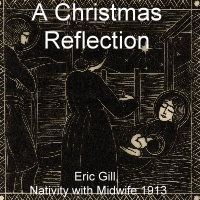
Christmas 2015 Reflection ImageYour are most welcome to join us at our Christmas celebrations this year!

Sunday December 23 (Advent 4 morning worship): a service of Advent carols and readings with Eucharist, 10am.

Christmas Eve (afternoon and evening): (we have Christmas Eve services at Mark the Evangelist, but commend the Christmas Eve services at St Mary’s Anglican Church – the 4pm “Kids’ Christmas” and the 11.30pm Christmas Eve Midnight Mass)

Christmas Day: Worship with Eucharist, 9.30am

Normal services will continue, 10am, on December 30 and throughout January

MtE Update – November 23 2018

  1. On Sunday December 2 there will be a congregational meeting to receive the proposed budget for 2019 and for another info update on the buildings project.
  2. Safe Church Training at 11.30 on THIS SUNDAY 25 November. It’s not too late to sign up – let Ann or Craig know. The workshop will last for 2 hours. This is a valuable opportunity to acknowledge the importance of striving to be a Safe Church in our community and how each one of us is an important part of our success.  We will be providing sandwiches to sustain us during the training. A facilitator from the Safe Church unit at Synod will be there to lead the workshop. Please speak to Ann if you have any questions at all. If this date does not suit you, other congregations will be arranging workshops for which you could register.  Ann Wilkinson can help you discover those.
  3. We’ll conclude our short series on Ruth this Sunday, the festival of the  Reign of Christ. The reading for this coming Sunday November 18 will be Ruth 3.1-13, although it is whole of the Ruth-Boaz drama which will be our theme; some commentary from Howard Wallace on this text can be found here. (This was actually the set OT reading for November 11; we’ll hear it alongside Psalm 126 and this week’s set gospel, John 18.33-37). 

Other things potentially of interest


The Christmas Bowl 2018

Each year Mark the Evangelist encourages its members and others to contribute to the Christmas Bowl, an annual appeal run by Act for Peace which raises funds for various national and international relief projects.

For an introduction to the focus of the appeal this year, click on the video below. The Christmas Bowl’s own home page is here. To contribute to the appeal, go directly to the appeal’s donation page.

Introduction to the Christmas Bowl Appeal 2018

« Older Entries Recent Entries »