Author Archives: CraigT

Christmas 2017 at Mark the Evangelist

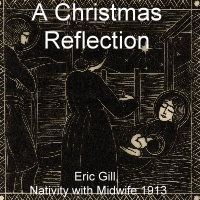
Christmas 2015 Reflection ImageYour are most welcome to join us at our Christmas celebrations this year!

Sunday December 24 (Christmas Eve, morning worship): a service of Advent carols and readings with Eucharist, 10am.

Christmas Eve (afternoon and evening): (we have no later services at Mark the Evangelist, but commend the Christmas Eve services at St Mary’s Anglican Church – the 4pm “Kids’ Christmas” and the 11.30pm Christmas Eve Midnight Mass)

Christmas Day: Worship with Eucharist, 9.30am

Normal services will continue, 10am, throughout January

Illuminating Faith – DocBytes

“Docbytes” are short, 2-page discussion pieces for church councils and small groups, produced by the Uniting Church Assembly’s National Working Group on Doctrine. They have a Uniting Church feel about them but would likely be of use to many others. The all Docbytes presently available can be found on the UCA Assembly web site, here.

Topics covered include:

Apologetics

Doctrine

Marriage

Ordination

Baptism

Peacemaking

Evangelism

Christian

Life

Lord’s Supper

Conversion

Worship

Lord’s Prayer

Reading the Scriptures

Funerals

Science & Faith


MtE Update – November 30 2017

The latest MtE News

  1. There will be a congregational meeting on Sunday December 10, following worship. The agenda will include presentation of the proposed 2018 budget, an official “launch” of a new ministry of the congregation, and a report on our buildings project.
  2. The most recent Presbytery news (November 28) is here.
  3. For those interested in some background commentary to the readings for this Sunday December 3, see the links here.

Other things potentially of interest

Treatment of asylum seekers and refugees – can the International Criminal Court prosecute Australia’s leaders for crimes against humanity?

Organised by The RMIT Arts, Labor & Working Life Collective & The Refugee Advocacy Network, Melbourne

How has Australia ended up here? A modern and democratic country – and early signatory to the UN Refugee Convention – is now referred to the International Criminal Court for crimes against humanity.  Members of the panel will talk about their submissions to the ICC and will examine why has happened and how – as civil society – we can be part of a concerted effort to end this human tragedy.

Speakers

  • Julian Burnside QC and Human rights advocate and submitter to the ICC
  • Professor Gillian Triggs, Vice Chancellor’s Fellow University of Melbourne & former President of the Australian Human Rights Commission
  • Mohammad Ali Baqiri, Refugee advocate formerly detained on Nauru
  • Tracie Aylmer, Human rights advocate, and submitter to the ICC

Thursday 7 December 2017, 6.00 – 8.00pm

Building 80, Level 2, Lecture Theatre 2

445 Swanston Street

RMIT University, City Campus

Map

This is a free event.

RSVP
Antonio Castillo: antonio.castillo@rmit.edu.au

LitBit Commentary – Bruce Barber on Prayer 1

LitBits Logo - 2

LitBit: What then is the difference between any old prayer and truly Christian prayer? In a sentence it is this – the general concept of prayer is a response to human emptiness, human need, our lack of one thing or another; Christian prayer, on the other hand, is a response to fullness: the richness and abundance that is the life and being of God which waits to take expression in the world. Depressing emptiness on the one hand, anticipatory fullness on the other.


Bruce Barber


How to use LitBit Features and Commentaries.

LitBit Commentary – James K A Smith on Worship 3

LitBits Logo - 2LitBit: There is a sense in which Christians are trained by the liturgy to be a people “untimely born,” as Paul says of himself (1 Cor. 15:8). This is not because we are traditionalists who slavishly and nostalgically long for the old ways (Jer. 6:16). However, there is a deep sense in which the church is a people called to resist the presentism embedded in the tyranny of the contemporary. We are called to be a people of memory, who are shaped by a tradition that is millennia older than the last Billboard chart. And we are also called to be a people of expectation, praying for and looking forward to a coming kingdom that will break in upon our present as a thief in the night. We are a stretched people, citizens of a kingdom that is both older and newer than anything offered by “the contemporary.” The practices of Christian worship over the liturgical year form in us something of an “old soul” that is perpetually pointed to a future, longing for a coming kingdom, and seeking to be such a stretched people in the present who are a foretaste of the coming kingdom.

James K A Smith, Desiring the Kingdom (Cultural Liturgies): Worship, Worldview, and Cultural Formation (p. 159).


How to use LitBit Features and Commentaries.

Lectionary Commentary – Reign of Christ/Christ the King A; (November 20 – November 26)

The following links are to the Revised Common Lectionary commentary pages of Howard Wallace and Bill Loader, and are suggested as preparation for hearing the readings in worship for the Sunday indicated above.

Series I: Ezekiel 34:11-16, 20-24 and Psalm 100

Series II: Ezekiel 34:11-16, 20-24 and Psalm 95.1-7a  (see Psalm 95 )

Ephesians 1:15-23

Matthew 25:31-46


January 14 – Monica Furlong

These weekly “People to Commemorate” posts are a kind of calendar for the commemoration of the saints, reproduced here from a Uniting Church Assembly document which can be found in full here. They are intended for copying and pasting into congregational pew sheets on the Sunday closest to the nominated date.

Images (where provided) are of icons by Peter Blackwood; click on the image to download a high resolution copy of the image.

Monica Furlong, Christian thinker

Monica Furlong was a Christian feminist who began as a journalist and went on to a prolific late-twentieth-century output of books. She published poetry, a couple of novels, stories for children, biographies of remarkable Christians, collected volumes of primary and secondary texts, works on spirituality, and especially analysis of women’s relations with Christianity in general and the Anglican Church in particular, both before and after female ordination became a reality.

But she was always on the lookout for good causes to espouse, and once she had thrown in her lot with the Movement for the Ordination of Women, and with the aims of secular feminism in general, she became to many women – and to many men as well, especially homosexuals – not just a beacon of light, more a flaming torch.

Like many intellectuals, her life was, in some ways, a protracted search for truth, accompanied by frequent disillusionment, most notably with the organised structures of society. In her book With Love To The Church (1965), she wrote, more in sorrow than in anger, of her disillusion with the apparent inability of the established Church to touch the hearts and minds of men and women of goodwill.

Born and brought up in Kenton, Middlesex, Furlong was particularly close to her father, who was a devout Roman Catholic. Monica was a second daughter, and her mother made no secret of the fact that she wanted a boy; Monica attributed the onset of a fairly disabling stammer. She was baptised as an Anglican but became, at an early age, a potential outsider; even as a child, she felt herself instinctively in sympathy with non-churchgoers. After education at Harrow county girls’ school and University College, London, she enrolled at Pitmans, and seemed destined for a dreary career as a shorthand typist.

In an attempt to break into journalism, Furlong sought a position with the Church Times but became instead secretary to a BBC talks producer, an employment for which she could not have been less well suited. In 1956, she joined Truth magazine as a feature writer and from 1958-60, she was the Spectator’s religious correspondent. Following her time with the Spectator she wrote for the Daily Mail for the next eight years.

As a freelance journalist, Furlong worked for the Guardian between 1956 and 1961, where her contributions covered a variety of emotional and socio-sexual issues – as they had done at the Mail. They dealt, too, with her preoccupation and personal commitment to the Christian faith, a vocation she had gained the self-confidence to express from her parish priest, Joost de Blank, later bishop of Stepney and Archbishop of Cape Town.

Returning to the BBC in 1974, Furlong worked as a religious programmes producer, and, by 1978, had gained the self-confidence to write a biography of the Trappist monk Thomas Merton. Later books included novels both for adults and children, and biographies of John Bunyan and Thérèse of Lisieux.

In the 1980s she campaigned for the ordination of women and, served as moderator of the Movement for the Ordination of Woman. Furlong’s reputation for reasoned debate and determination gave that movement considerable moral authority. When that goal was reached she called for the appointment of women to senior Church positions.

In 1987, she became a founder of the St Hilda Community (named after St Hilda of Whitby). She described it as “a body which tried to model a form of cooperation between men and women in liturgy, which used inclusive language, and which invited ordained women from other countries to come and celebrate openly, rather than, as was usual at the time, clandestinely.”

She has been called the Church of England‘s “most influential and creative layperson of the post-war period”

Monica Furlong died January 14 2003

January 13 – George Fox

These weekly “People to Commemorate” posts are a kind of calendar for the commemoration of the saints, reproduced here from a Uniting Church Assembly document which can be found in full here. They are intended for copying and pasting into congregational pew sheets on the Sunday closest to the nominated date.

Images (where provided) are of icons by Peter Blackwood; click on the image to download a high resolution copy of the image.

George Fox, renewer of society

1624-1691  

George Fox was first amongst Quakers, a weaver’s son, a revolutionary in his time, who lived in the power of the Spirit of Christ without compromise even to his personal harm. A man who suffered with gladness the often violent retribution of those who saw him as a devil intent on destroying their livelihood, the established church and by extension the state. Irascible for the truth and justice as he saw it, never loosing an argument, yet deeply empathetic to those who recognised the error of their ways. A charismatic figure, with a gift for debate and an encyclopedic knowledge of the bible much loved by his friends and followers.

Born in The small village of Fenny Drayton in Leicestershire, little is known of his early life except that he worked as a shepherd and that he was of a more serious nature amongst his siblings and contemporaries. He particularly stood out in religious matters.

At the age of 19 he went away seeking himself, wisdom and the calling God had laid out for him. He found no comfort from any he turned to, particularly priests and ministers, recognising that they did not possess what they professed. In his searching he became a man of sorrows, often alone and despairing until he realised that all his hopes in men were gone and he had nothing outwardly to help him. Then he had a revelation from his own experience “Oh then, I heard a voice which said ‘ There is one, even Christ Jesus, that can speak to thy condition’, and when I heard it my heart did leap for joy”[1]. This was the turning point of his life and also the kernel from which Quakerism would grow. He listened to his inward teacher and gained in truth and power that none could gainsay him. He lived and worked among ordinary people for several years after this gaining a small following.

In 1652 while alone in prayer on Pendle Hill in Lancashire, he had a vision of a great people gathered as sheep under the one shepherd and from this point onwards where ever he went he began to preach as the Lord commanded. Slowly but surely the ‘Friends of the Truth’, later simply Friends, began to evolve. There was however much opposition and consequently much suffering with assaults, estrangements of goods, imprisonment and even death common amongst these gathering people. George Fox was imprisoned 8 times during his life and he was beaten unconscious on more than one occasion, but he was fearless in these situations and would challenge his attackers to hit him again.

Later in 1652, while preaching in Ulverston in Cumbria, Margaret Fell, wife of the local Judge Thomas Fell became a convert and under her patronage and Thomas’s protection, the Society of Friends began to grow.

In 1661 George met with Charles II and repeated his declaration to Oliver Cromwell of 1651 that he and all Quakers ‘utterly deny all outward wars and strife and fightings with outward weapons, for any end or under any pretence whatever’[2]. He was attempting to halt the persecution of Friends and this happened eventually. This was the foundation of the Quaker peace testimony.

In 1669, 11 years after Judge Fell’s death Margaret married George though they spent little time living together as they were constantly traveling and labouring in the Ministry when they were not in prison.

William Penn said of him “He had an extraordinary gift in opening the scriptures…. But above all he excelled in prayer….. And truly it was a testimony that he knew and lived nearer to the Lord than other men”[3]

Anthony Buxton, Society of Friends


[1] Journal of George Fox. Edited John.L. Nickalls 1997 page 11.

[2] Quaker Faith  & Practice fifth edition 2013 Yearly Meeting of the Religious Society of Friends (Quakers) in Britain 24.04

[3] Op City 2.72.

January 3 – Gladys Aylward

These weekly “People to Commemorate” posts are a kind of calendar for the commemoration of the saints, reproduced here from a Uniting Church Assembly document which can be found in full here. They are intended for copying and pasting into congregational pew sheets on the Sunday closest to the nominated date.

Images (where provided) are of icons by Peter Blackwood; click on the image to download a high resolution copy of the image.

Gladys Aylward, Christian pioneer

 Gladys Aylward was born in London in 1904 and through attending revival meetings dedicated her life to the service of God becoming convinced that she was called to preach the Gospel in China. At the age of 26, she travelled to China by the Trans-Siberian Railway and eventually met up a 73 year old missionary, Mrs Lawson in the inland city of Yangchen.

Yangchen was an overnight stop for mule caravans that carried coal, raw cotton, pots, and iron goods on six-week or three-month journeys. The two women decided to set up an inn and alongside caring for t heir travellers and their mules told stories about a man named Jesus. Gladys became fluent in Chinese but suffered a setback when Mrs. Lawson died after a severe fall. Gladys Aylward was left to run the mission alone, with the aid of one Chinese Christian, Yang, the cook.

A few weeks after Mrs. Lawson’s death, the Mandarin of Yangchen arrived in a sedan chair, and told her that the government had decreed an end to the practice of foot-binding. The government needed a foot-inspector, who would patrol the district enforcing the decree, and he offer Gladys the job, realizing that it would give her opportunities to spread the Gospel.

On another occasion Gladys was summoned by the Mandarin to deal with a riot in the men’s prison. The convicts were rampaging in the prison courtyard, and several of them had been killed. The warden of the prison said to Gladys, “Go into the yard and stop the rioting.” She said, “How can I do that?” The warden said, “You have been preaching that those who trust in Christ have nothing to fear.” She walked into the courtyard and shouted: “Quiet! I cannot hear when everyone is shouting at once. Choose one or two spokesmen, and let me talk with them.” The men quieted down and chose a spokesman. Gladys talked with him, and then came out and told the warden: “You have these men cooped up in crowded conditions with absolutely nothing to do. No wonder they are so edgy that a small dispute sets off a riot. You must give them work. Also, I am told that you do not supply food for them, so that they have only what their relatives send them. No wonder they fight over food. We will set up looms so that they can weave cloth and earn enough money to buy their own food.” This was done. There was no money for sweeping reforms, but a few friends of the warden donated old looms, and a grindstone so that the men could work grinding grain. The people began to call Gladys Aylward “Ai-weh-deh,” which means “Virtuous One.” It was her name from then on.

Over the course of her time in China Gladys rescued several children from poverty by adopting them and giving them a home. In 1936, she officially became a Chinese citizen. She lived frugally and dressed like the people around her and this was a major factor in making her preaching effective.

In the spring of 1938, the Japanese bombed Yangcheng, killing many. The Mandarin gathered the survivors and told them to retreat into the mountains. He also announced that he was impressed by the life of Ai-weh-deh and wished to make her faith his own. There remained the question of the convicts at the jail. The traditional policy favoured beheading them all lest they escape. The Mandarin asked Ai-weh-deh for advice, and a plan was made for relatives and friends of the convicts to post a bond guaranteeing their good behaviour. Every man was eventually released on bond.

As the war continued Gladys often found herself behind Japanese lines, and often passed on information, when she had it, to the armies of China, her adopted country.

Gladys eventually gathered up over 100 children and walked with them for twelve days to the government orphanage at Sian, eventually delivering her charges into competent hands at Sian, and then promptly collapsed with typhus fever.

As her health improved, she started a Christian church in Sian, and worked elsewhere, including a settlement for lepers in Szechuan, near the borders of Tibet. Her health was permanently impaired by injuries received during the war, and in 1947 she returned to England for a badly needed operation. She remained in England, preaching there.

Miss Gladys Aylward, died 3 January 1970.


PRAYER

Almighty and everlasting God,

we thank you for your servant Gladys Aylward,

whom you called to preach the Gospel to the people of China.

Raise up in this and every land heralds and evangelists of your kingdom,

that your Church may make proclaim the unsearchable riches

of our Saviour Jesus Christ;

who lives and reigns with you and the Holy Spirit, one God, now and for ever.


« Older Entries Recent Entries »