
Author Archives: CraigT

August 12 – Ann Griffiths

These weekly “People to Commemorate” posts are a kind of calendar for the commemoration of the saints, reproduced here from a Uniting Church Assembly document which can be found in full here. They are intended for copying and pasting into congregational pew sheets on the Sunday closest to the nominated date.

Images (where provided) are of icons by Peter Blackwood; click on the image to download a high resolution copy of the image.

Ann Griffiths, person of prayer

Ann Griffiths (1776-1805) was a prominent Welsh poet and hymn-writer, and a Christian poet of international stature. Although she died at only 29 years of age, this farmer’s daughter from mid-Wales left poems and letters that are considered among the highlights of Welsh literature. Many scholars consider her to be the greatest of Welsh women poets and claim that her stanzas include some of the great Christian poetry of Europe.

Ann Griffiths was born Ann Thomas in Montgomeryshire the daughter of a prosperous farmer, a devout Anglican. In her youth she was known to seek the society of others and enjoyed dancing, a little too much perhaps. In 1796, two years after the death of her mother, Ann was converted by the preaching of a Congregational minister Benjamin Jones. Later, with her family she came under the influence of Thomas Charles a Calvinist Methodist who made a great impression on the young woman’s mind and heart. Calvinistic Methodism was a movement which placed great emphasis not only on the orthodox beliefs of the Christian faith, but on the personal experience of those beliefs, on feeling the truths of the Faith. Until 1811 Welsh Calvinistic Methodism was officially a movement within the Established Church and not a separate denomination.  Members of the movement would meet together in local groups called seiadau (singular seiat, from the English word ‘society’), where they would discuss and examine their religious experiences and receive help and instruction on their spiritual journey. In addition, there was a network of monthly meetings and quarterly association meetings (or sasiynau; singular sasiwn) to superintend the work.

Ann, then, was considered a person whose spiritual experiences were remarkable even at a time of powerful religious awakening. The examples of Ann’s work that have been preserved for us are both the fruit of those intense spiritual experiences and an expression of them. The sum total of her surviving work is small: eight letters and just over 70 stanzas, and only one letter and one stanza in her own hand. Ann Griffith’s poems would probably be called “hymns” but they are not ‘congregational’ hymns. They are more “praise poems” written by Ann as a kind of spiritual journal entry when there was ‘something in particular on her mind.’

The Bible was central to Ann’s life and work and the key to forming and interpreting her experience of God whom she knew through the person of Jesus Christ. The hymns she wrote were centered on the figure of Christ crucified but including imagery from both Testaments. They exhibit an extraordinary emotional fervor and a critical knowledge of the Bible with a combination of intellect and devotion that is remarkable in a woman of her time.
At the same time Ann’s experience of God included having visions of Jesus and she admitted to “visitations”, seeing Christ waiting for her among the myrtles.   Sent into the potato shed to collect potatoes she might be found hours later in a trance. This has given rise to the tendency to call her “a mystic.”

Ann Griffiths died aged 29 after giving birth to her only child who also died and was buried two weeks before her.
Lectionary Commentary – Sunday/Ordinary 19A; Proper 14A (August 7 – August 13)

The following links are to the Revised Common Lectionary commentary pages of Howard Wallace and Bill Loader, and are suggested as preparation for hearing the readings in worship for the Sunday indicated above.

Series I: Genesis 37:1-4, 12-28 and Psalm 105:1-6, 16-22, 45b

Series II:  1 Kings 19.9-18 (see 1 Kings 19:1-4, (5-7), 8-15a) and Psalm 85.8-13 (see Psalm 85:1-2, 8-13)

Matthew 14:22-33

Romans 10:5-15


MtE Update – August 3 2017

Friends,

the latest MtE Update!

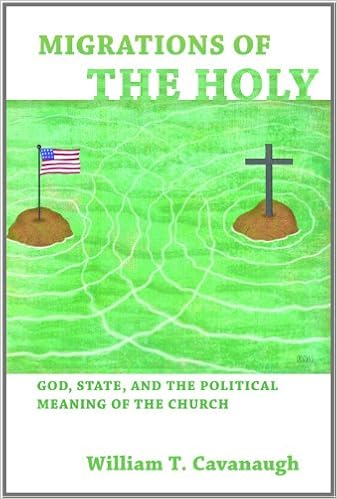
  1. Our next study series begins next week. “Migrations of the Holy” – is a study in “the political meaning of the church”, and we’ll consider chapters on “The Liturgies of Church and State”, “The Church as Political”, “Migrant, Tourist, Pilgrim, Monk” and “The Sinfulness and Visibility of the Church.” You can REGISTER for a group from this page.
  2. Please contact Sue if you are able to assist with the worship roster for the next few months, or if you’re usually on the roster but will be away for some of that time.
  3. There will be a congregational meeting on THIS SUNDAY August 6 following worship; the main item of business will be considering proposed focuses for mission and ministry for the next 18 months; a report will also be given on progress with our buildings project.
  4. For those interested in some background reading to the readings for this Sunday August 6, see the links here. We are presently hearing the Series II OT readings on Sunday.

Lectionary Commentary – Sunday/Ordinary 18A; Proper 13A (July 31- August 6)

The following links are to the Revised Common Lectionary commentary pages of Howard Wallace and Bill Loader, and are suggested as preparation for hearing the readings in worship for the Sunday indicated above.

Series I: Genesis 32:22-31 and Psalm 17

Series II: Isaiah 55.1-5 (see Isaiah 55:1-9) and Psalm 145.8-9,14-21 (see Psalm 145:1-5, 17-28)

Matthew 14:13-21

Romans 9:1-5


August 8 – Mary Helen MacKillop

These weekly “People to Commemorate” posts are a kind of calendar for the commemoration of the saints, reproduced here from a Uniting Church Assembly document which can be found in full here. They are intended for copying and pasting into congregational pew sheets on the Sunday closest to the nominated date.

Images (where provided) are of icons by Peter Blackwood; click on the image to download a high resolution copy of the image.

Mary Helen MacKillop, Christian pioneer

 Mary Helen MacKillop became the first Australian to be officially recognised for ‘extraordinary holiness’ by the Roman Catholic church in October 2010.  She pioneered a new form of religious community for women, working in twos and threes to respond to the the need for both education in faith and social outreach in colonial Australia, especially among the poor.

A plaque in the footpath in Brunswick St, Fitzroy marks the place where the MacKillops’ rented house stood and where Mary was born on 15 January 1842. She was the first of eight children of Alexander MacKillop and his wife Flora (MacDonald) who had migrated from Inverness, Scotland. She was educated mostly at home by her father. The family finances which were often precarious, and relied on Mary’s income from the time she was 14. She was a clerk in Sands and Kenny stationers (later Sands and MacDougal) for four years, and then teacher in Portland, Victoria before taking a position as governess to her aunt and uncle’s children (the Camerons) in Penola, South Australia.

In Penola she shared her hopes of religious life with the parish priest, Fr Julian Tenison-Woods, and together they developed plans to provide Catholic education to children especially in rural and poor areas.  On 15 August 1867 she took vows as a religious sister within the new community dedicated to St Joseph and the Sacred Heart of Jesus, and adopted the name Mary of the Cross. The rule of life of the new community emphasised poverty, dependence on Divine Providence, no private ownership and the openness of the Sisters to go wherever they were needed. In November 1867 Mary’s sisters Annie and Lexie joined the new community, by the end of 1867 there were 10 members, and two years later 72 members running 21 schools as well as outreach and welfare centres.

However, misunderstanding dogged the work, and Mary learnt early to remain serene while being misrepresented and humiliated. The Sisters did not fit traditional European models of cloistered life, and Mary was famously excommunicated in Adelaide for nine months from September 1871 until the sentence was lifted in February 1872, and papal authority for the work confirmed in 1873. Nevertheless, the Sisters’ system of central government (under the director of their own superior rather than the local bishops) remained controversial. In 1883 in the midst of ongoing tensions, Mary transferred the administrative centre to Sydney. She suffered a stroke in 1901, and although mentally alert was an invalid until her death on 8 August1909.

The wideapread publicity around her canonisation in 2010 brought new interest in her life. As the Josephite Sisters continued to remind the public, the conviction that God is to be trusted, that Jesus really is the model of freedom, defined MacKillop’s commitments before anything else. See http://www.marymackillop.org.au/.

Mary modelled a commitment to ‘above all get help in prayer’. Her letters (the bulk of her writing) were often preoccupied with business, but underpinned by faith. She was sustained by her conviction that the human dignity of each person was God-given. Her capacity to speak reverently and carefully even of those who had caused her great pain and damage inspired her Sisters. She was committed to drawing out the best in others, advising: in 1871:  “Make no reserves with God. Reject no-one. You never know what grace can do.”

Katharine Massam

MtE Update – July 28 2017

Friends,

the latest MtE Update!

  1. Our next study series begins in a couple of weeks. We learn heaps together in the groups! The next book – “Migrations of the Holy” – is a study in “the political meaning of the church”, and we’ll consider chapters on “The Liturgies of Church and State”, “The Church as Political”, “Migrant, Tourist, Pilgrim, Monk” and “The Sinfulness and Visibility of the Church.” You can REGISTER for a group from this page.
  2. There will be a congregational meeting on Sunday August 6 following worship; the main item of business will be considering proposed focuses for mission and ministry for the next 18 months; a report will also be given on progress with our buildings project.
  3. Public Lecture: Priorities for a public theology in a time of extremisms: Fresh insights from Bonhoeffer
    • Thursday, August 10, 2017
    • 6:00pm  8:00pm
    • Whitley College Theological School44-52 The AvenueParkville, VIC, 3052Australia

    Lecturer Revd Dr Keith Clements taught at Bristol Baptist College and Bristol University before serving with the Council of Churches for Britain and Ireland and as General Secretary of the Council of European Churches. Author of What Freedom? The persistent challenge of Dietrich Bonhoeffer, Learning to speak: The church’s voice in public affairs and others.

    Respondent: Revd Dr Gordon Preece, Director of RASP, editor of Bonhoeffer Downunder, ATF, 2012. FREE | Register at TryBooking. This event is co-hosted by Whitley College and RASP.

  4. For those interested in some background reading to the readings for this Sunday July 30, see the links here. We are presently hearing the Series II OT readings on Sunday.

Lectionary Commentary – Sunday/Ordinary 17A; Proper 12A (July 24-July 30)

The following links are to the Revised Common Lectionary commentary pages of Howard Wallace and Bill Loader, and are suggested as preparation for hearing the readings in worship for the Sunday indicated above.

Series I: Genesis 29:15-28 and Psalm 105:1-11, 45b

Series II: 1 Kings 3:5-12 [No link] and and Psalm 119:129-136 [see on Psalm 119:33-40]

Romans 8:26-39

Matthew 13:31-33, 44-52


July 30 – William Wilberforce

These weekly “People to Commemorate” posts are a kind of calendar for the commemoration of the saints, reproduced here from a Uniting Church Assembly document which can be found in full here. They are intended for copying and pasting into congregational pew sheets on the Sunday closest to the nominated date.

Images (where provided) are of icons by Peter Blackwood; click on the image to download a high resolution copy of the image.

William Wilberforce, renewer of society

Born on 24 August, 1759 in Hull, Wilberforce was the son of a wealthy merchant, who died in 1768. Brought up by an aunt, he attended Hull Grammar and then St John’s College Cambridge in 1776.  In 1780, he became member for Kingston upon Hull. He was a close friend of William Pitt and an important independent, because of his eloquence and membership of networks. In 1784 he moved to the influential constituency of Yorkshire and travelled round Europe during 1784-85 in the company of Isaac Milner, who guided him into a deeper commitment to Christ and persuaded him to see a parliamentary career as a Christian vocation. He had two priorities – the suppression of the slave trade and the reformation of manners, setting up a society for that purpose in 1787.

Wilberforce married Barbara Spooner in 1797. They had two daughters and four sons, brought up in Clapham, where he was part of an influential network of Christian activists. Concerned about the nominal commitment of many Christians, he wrote a best- selling book of 500 pages in 1797 to challenge their limitations. Entitled A practical view of the prevailing religious system of professed Christians of  the higher and middle classes of this country contrasted with real Christianity, it went through many editions.  Wilberforce wrote passionately about the need for recognition of humanity’s sinful nature, the need for redemption and the importance of holiness, based on total commitment to the crucified and risen Lord. He thus outlined the main features of 19th century British Evangelicalism and its implications.

In addition, Wilberforce actively supported bodies such as the Church Missionary Society and the Bible Society, as well as assisting Hannah Moore’s work. He worked with Thomas Clarkson to achieve the abolition of the British slave trade in 1807, after a wide-ranging combination of debate and publication. Initially supportive of Catholic Emancipation, he became more cautious on this after observing the results of the French Revolution. He helped to open India to Christian missions and was a strong ally of those working for comprehensive Sunday observance.

From 1823, he and his allies worked diligently for the abolition of slavery in the British Empire, a goal achieved just three days before his death, 29 July, 1833. Not always sensitive to social injustice in Britain and becoming more conservative in his later years, he nevertheless contributed to many changes which benefited the poor. His example continues to inspire Evangelicals worldwide to work for spiritual renewal and social justice.

by Rev Dr Ian Breward


Migrations of the Holy – Study Series August and September 2017

Our August 2017 Study Series will look at William Cavanaugh’s, Migrations of the Holy.

Wednesdays August 9 – September 13, 7.30-9.00pm, Mark the Evangelist, North Melbourne (venue TBA) [Note: no group August 16]

Fridays August 11 – September 15, 9.30-11.00am, Habitat Uniting Church (Augustine) [Note: no group August 18]

In order to confirm the viability of the groups, please register your interest for a group here.

As the book is too long to treat in 5 weeks, we’ll only look at a selection of the chapters, as outlined below. The order of these selections is intended to give us an easier induction into Cavanaugh’s argument.

Week 1 — Introduction and Chapter 6 “The Liturgies of Church and State”

  • [The intrepid might find the long Chapter 1 a useful complement to the set readings for this week, but we’ll not assume that anyone has read Chapter 1]

Week 2 – Chapter 7 “The Church as Political”

  • [Chapter 2 might be a useful complement to this reading, for those with the extra time and interest]

Week 3 – Chapter 3 “Migrant, Tourist, Pilgrim, Monk”

Week 4 – Chapter 8 “The Sinfulness and Visibility of the Church”

  • [for those with the extra time, Chapter 9 might be a helpful complement to Chapter 8]

Week 5 – TBC

  • [Depending on how we’ve gone in the preceding weeks, and what from the remaining chapters of the book group would like to look at in the remaining week]

Sourcing your copy of Migrations:

Kindle [instant electronic]
Book depository [Usually within a week from the UK]


« Older Entries Recent Entries »